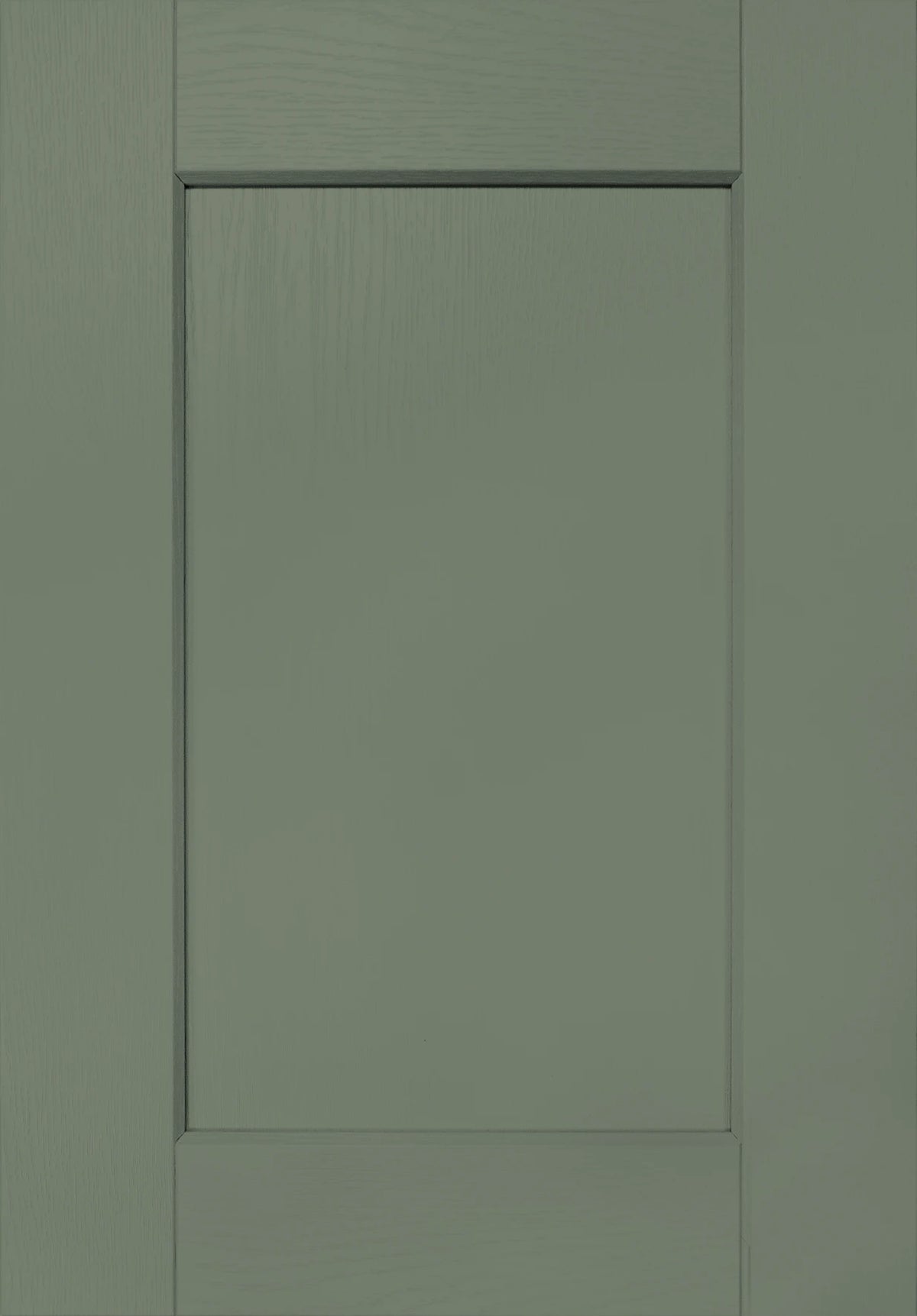
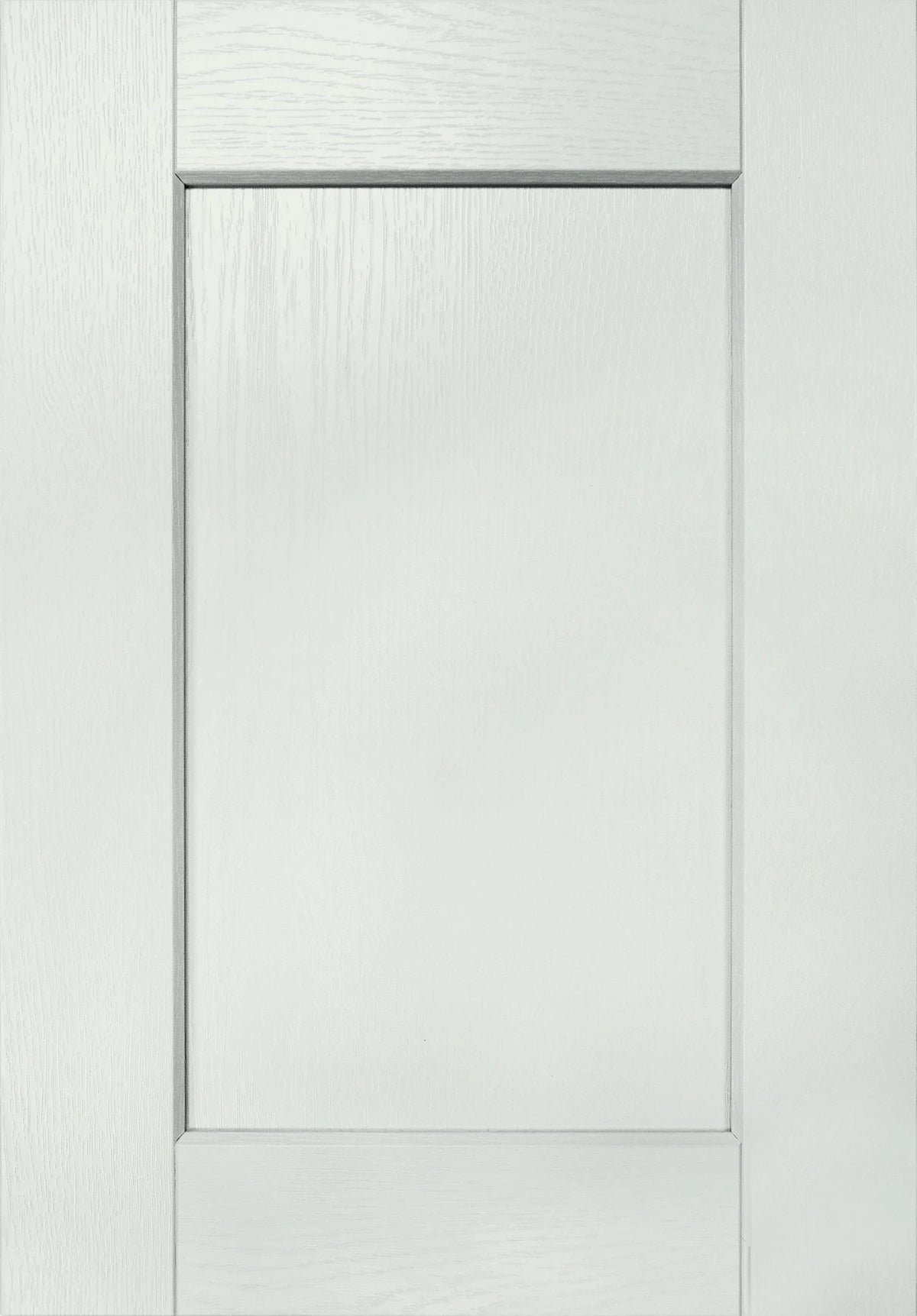
A Modern Take on the Classic Shaker Frame
This range takes the familiar, timeless shaker door frame and gives it a smoother, more contemporary finish, an 80mm slim frame that keeps the classic proportions people know and trust, while moving away from anything that reads as overly traditional. A standard shaker door is usually built around a wider frame, often closer to 100mm or more, with the resulting proportions reading as noticeably heavier and more period-appropriate. This range deliberately narrows that frame down to 80mm, which has a genuine visual effect, the centre panel reads as larger relative to the surrounding frame, giving the whole door a cleaner, more contemporary feel without losing the shadow lines and depth that make a shaker door recognisable in the first place.
At Aspin Collins, these kitchen doors are available in six genuinely distinct colours, Sage Green, Reed Green, Porcelain, Light Grey, Indigo, and Cashmere, each with matching drawer fronts and finishing components for a fully coordinated finish across your whole kitchen, from the doors themselves right through to plinths, cornices, and end panels.
What Makes This a Modern Shaker Door
A traditional shaker door is built around a sunken central panel within a plain, wide surrounding frame, simple, functional, and enduringly popular since its origins in 18th century American furniture-making. This range keeps that fundamental structure, since the appeal of a shaker door has never really been about ornamentation, but refines it, a slimmer 80mm frame with a subtle bevel running around the panel edge and genuine V grooves cut into the frame itself, giving a cleaner, more contemporary look that suits a modern kitchen just as comfortably as a more classic one.
Every door is constructed from genuine 22mm MDF, a dense, stable base material that holds its shape well over years of use, foil wrapped across the face and edges with a matt woodgrain texture pressed through the colour itself rather than printed flat on top of it. The result is a surface that catches light with real texture and depth, closer in feel to painted solid timber than a flat, uniform vinyl wrap, while remaining considerably more affordable and consistent in colour across a full kitchen's worth of doors than genuine solid wood would be.
Sage Green: Calm, Natural, and Genuinely Versatile
Sage Green brings a calming, nature-inspired tone to a kitchen, and it's genuinely one of the most requested colours in this style of door across the whole UK market right now, for good reason. Its muted, grey-tinted undertone means it reads as sophisticated rather than overpowering, unlike a brighter, more saturated green that can dominate a smaller room. Sage Green pairs particularly well with warm wood worktops in oak or walnut, natural stone surfaces, and brass or antique brass hardware, all of which lean into its earthy, organic character rather than fighting against it. It's a colour that has proven itself over several years now rather than appearing and fading as a passing trend, which makes it a genuinely safe long-term choice for anyone weighing up how a kitchen colour will feel in five or ten years' time, not just on the day it's fitted.
Reed Green: A Distinct Alternative, Not a Variation
Reed Green sits alongside Sage Green in the range, but the two are genuinely different shades rather than close variations of the same colour, worth comparing directly with a physical sample rather than assuming one is simply a lighter or darker version of the other. Reed Green tends to read slightly deeper and more grounded, a considered alternative for anyone who likes the direction of Sage Green but wants a touch more depth in the final result. Like Sage Green, it pairs naturally with warm timber tones, oak flooring and worktops in particular, and tends to suit both a farmhouse-leaning scheme and a more contemporary, pared-back kitchen equally well.
Porcelain: A Warmer Alternative to Stark White
Porcelain offers a soft, warm off-white, avoiding the slightly clinical feel a pure white door can sometimes bring to a kitchen, particularly under cooler artificial lighting in the evening. It works especially well in a kitchen wanting to feel bright and open without going fully stark, and pairs naturally with warm wood flooring, brass or gold hardware, and softer, more textured worktop finishes. Because it holds a warmer base tone than a true white, Porcelain also tends to shift less under different lighting conditions, staying recognisably the same shade in daylight, under warm evening lighting, and under cooler LED spotlights, where a pure white can sometimes read as faintly blue or grey depending on the bulb.
Light Grey: A Cool, Contemporary Neutral
Light Grey provides a genuinely flexible, cool-toned neutral that works with almost any worktop or splashback choice, from bright white marble-effect surfaces through to darker, moodier stone finishes. It's a strong choice for anyone wanting a contemporary kitchen that won't feel dated in a few years, since a well-balanced mid-tone grey has proven considerably more enduring than more of-the-moment colour trends that tend to feel specific to a particular year or two. Light Grey also does genuinely useful practical work in a kitchen, reflecting light in a similar way to white while being noticeably more forgiving of everyday fingerprints and light marks, which matters in a high-traffic family kitchen.
Indigo: A Genuine Statement Colour
Indigo is the boldest option in the range, a deep, confident blue suited to a kitchen wanting real colour impact rather than a safe neutral. It works particularly well in a spacious kitchen, where a strong colour reads as confident rather than overwhelming, and pairs beautifully with brass or unlacquered brass hardware, which develops its own natural patina over time alongside Indigo's own depth of colour. In a smaller or darker room, Indigo is still a workable choice, but it's worth balancing with lighter worktops, splashbacks, or wall colours elsewhere in the room, so the overall scheme doesn't feel heavier than intended.
Cashmere: Warm, Understated, and Easy to Live With
Cashmere rounds out the range with a warm, understated tone that sits comfortably between white and grey, genuinely one of the easiest colours to build a scheme around, since it neither competes with bold worktops nor disappears into the background. It carries a subtle pinkish warmth that reads as soft and inviting rather than clinical, and works equally well against golden-toned woodgrain flooring for a warm, rustic feel, or against slate-grey tiles and darker stone for a cooler, more contemporary contrast.
Stocked and Ready to Order
These doors are stocked and ready to order, letting you refresh a kitchen's entire look by replacing the doors alone, without needing to remove or replace your existing cabinet carcasses, a significantly more affordable route to a new kitchen look than a full refit. The range covers an extensive set of standard sizes, from small 146mm drawer fronts through to large 1425mm doors, plus specific sizes for glazed frame doors and a dedicated 495 x 396mm option sized for a double Belfast sink unit. This breadth of sizing means most standard UK kitchen layouts can be matched accurately without needing a fully bespoke order, which typically carries both a higher price and a considerably longer lead time.
Glazed Options for Display Cabinets
Alongside solid doors, this range is available in genuine glazed door options with clear glass, in 715 x 396mm, 715 x 496mm, 715 x 596mm, 895 x 496mm, and 1060 x 496mm sizes. A glazed door is a considered choice for a display cabinet or a dresser unit, letting you show off crockery or glassware behind a frame that still matches the rest of your door run in colour and finish, rather than needing to source a separate glazed unit from elsewhere that may not match precisely.
Coordinating Panels for a Seamless Finish
Every colour comes with matching drawer fronts and finishing components, plinths, cornices, corner posts, and end panels, so every exposed cabinet surface can be finished in the exact same colour and texture as your doors, rather than settling for a close-but-not-quite match from a different supplier. This is genuinely worth planning at the same time as your door order, particularly on any run where an end panel will be visible from the room rather than hidden against a wall, since ordering it later as an afterthought risks a subtle colour mismatch between manufacturing batches.
Order a Sample Before You Commit
Given how much a colour can shift depending on lighting, it's genuinely worth ordering a physical sample of your chosen finish before placing a full order, particularly for a considered colour like Indigo or Sage Green, where the difference between how it looks on a screen and in your own kitchen's natural light can be significant. A sample also lets you check the woodgrain texture and matt finish in person, which a photograph can only approximate.
Choosing the Right Handles for Your Colour
Once you've settled on a colour, our guide to best handle colours for your kitchen cabinets is a useful companion read, since the right handle finish depends heavily on which shade you choose. Brass and antique brass tend to suit Sage Green, Reed Green, and Cashmere particularly well, playing into their warmer, more earthy character, while chrome or brushed nickel pairs naturally with Light Grey or Indigo for a cooler, more contemporary finish.
Fast, Reliable Delivery
These doors are stocked and dispatched promptly, with delivery across the UK. If you're unsure which colour or size combination suits your existing kitchen, call us on 0161 465 4007 and our team can talk through your measurements before you order, helping avoid the cost and delay of an incorrect size being delivered.