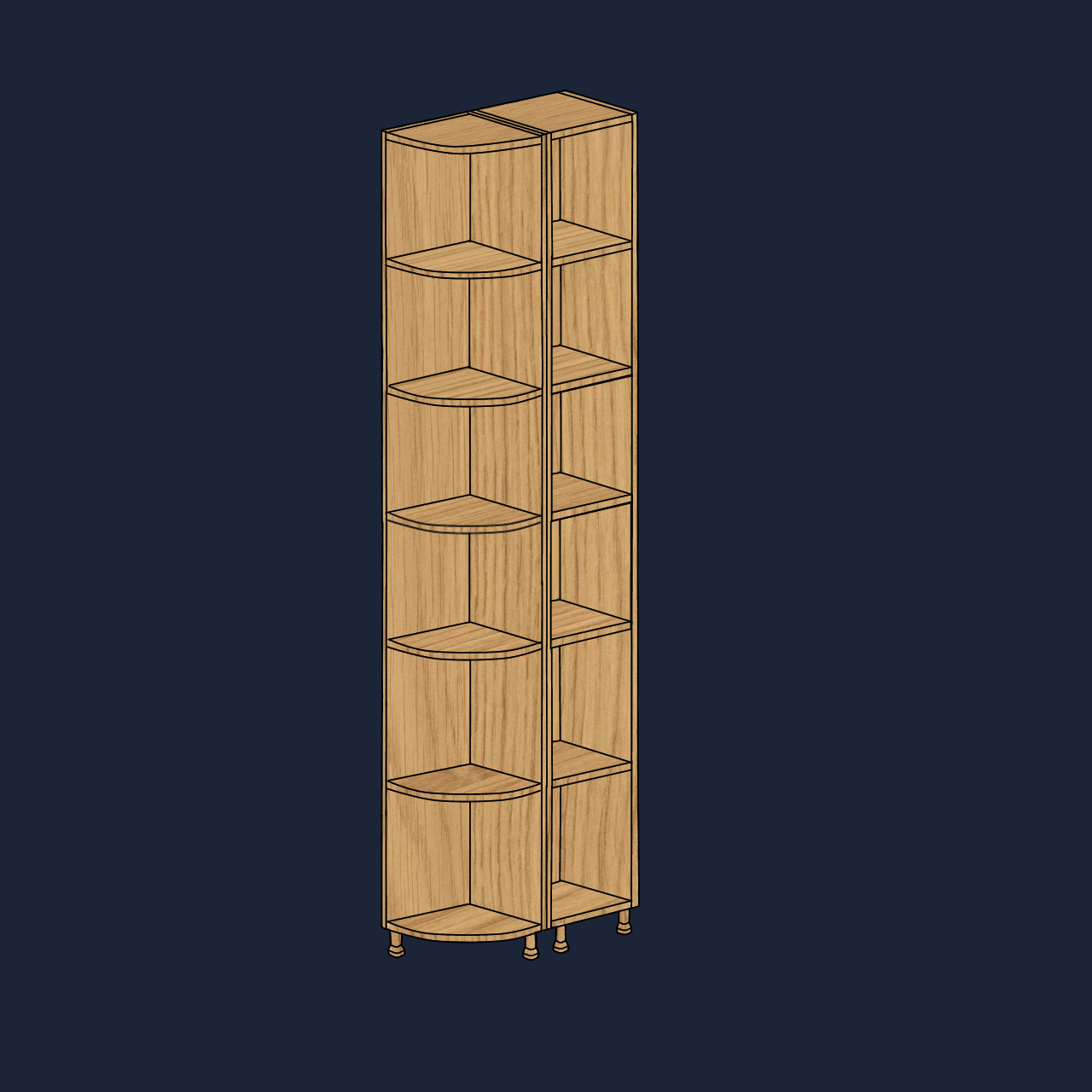
Curved Kitchen Units: Softening the Run
A sharp 90-degree corner isn't always the right finish for a run of kitchen cabinets. A curved kitchen unit replaces that hard edge with a soft external radius, breaking up an otherwise boxy layout and giving a kitchen genuine architectural interest exactly where a run of cabinets ends. At Aspin Collins, our curved unit range covers base, wall, and full-height cabinets in four finishes, White, Oak, Dust Grey, and Light Grey, all built on our fast Quickcab assembly system.
What a Curved Unit Actually Does
A radius kitchen cabinet finishes the end of a cabinet run with a rounded external profile rather than a square corner, softening the transition where cabinetry meets an open space, a doorway, or a seating area. This is particularly effective in open-plan kitchens, where a hard, square-edged tall unit can feel abrupt right next to a dining or living zone, a curved end genuinely eases that transition rather than presenting a flat wall of cabinetry. Curved units are typically positioned at the end of a run, though they can also be used to soften a specific internal corner depending on your layout.
Why a Curved Carcass Costs More to Build Properly
It's worth understanding what actually goes into a genuine curved end panel cabinet, since it's a more demanding build than a standard straight-sided carcass. A curved carcass still uses cam-and-dowel joinery for a rigid, positive mechanical lock at every joint, the same construction principle as a straight cabinet, but the curved leading edge needs its own careful ABS edge banding, a process that's considerably harder to get right on a radius than on a straight cut, since the edging has to follow the curve cleanly without bubbling or lifting. The back panel still carries full-thickness 18mm MFC around the curved profile, the same board as the rest of the carcass, giving genuine rigidity rather than a thinner panel cut to save cost on the harder-to-form section. This is part of why curved cabinetry across the industry typically costs more than an equivalent straight unit, the shaping and edging work is genuinely more involved, not simply a cosmetic difference.
Our Curved Unit Range
Curved Base Units finish a base cabinet run at floor level, our Curved Base Unit brings the same soft external radius to your worktop-height cabinetry, rounding off an end that would otherwise sit as a sharp corner.
Curved Wall Units carry that same radius up to wall cabinet height, our Curved Wall Unit (720mm) features a unique external radius design built specifically to pair with Cavallo and Windsor curved doors, and includes one internal shelf with an 8mm back panel for genuine strength and longevity. For taller wall cabinetry, our Curved Wall Unit (900mm) offers the same radius profile at an increased height for more storage capacity.
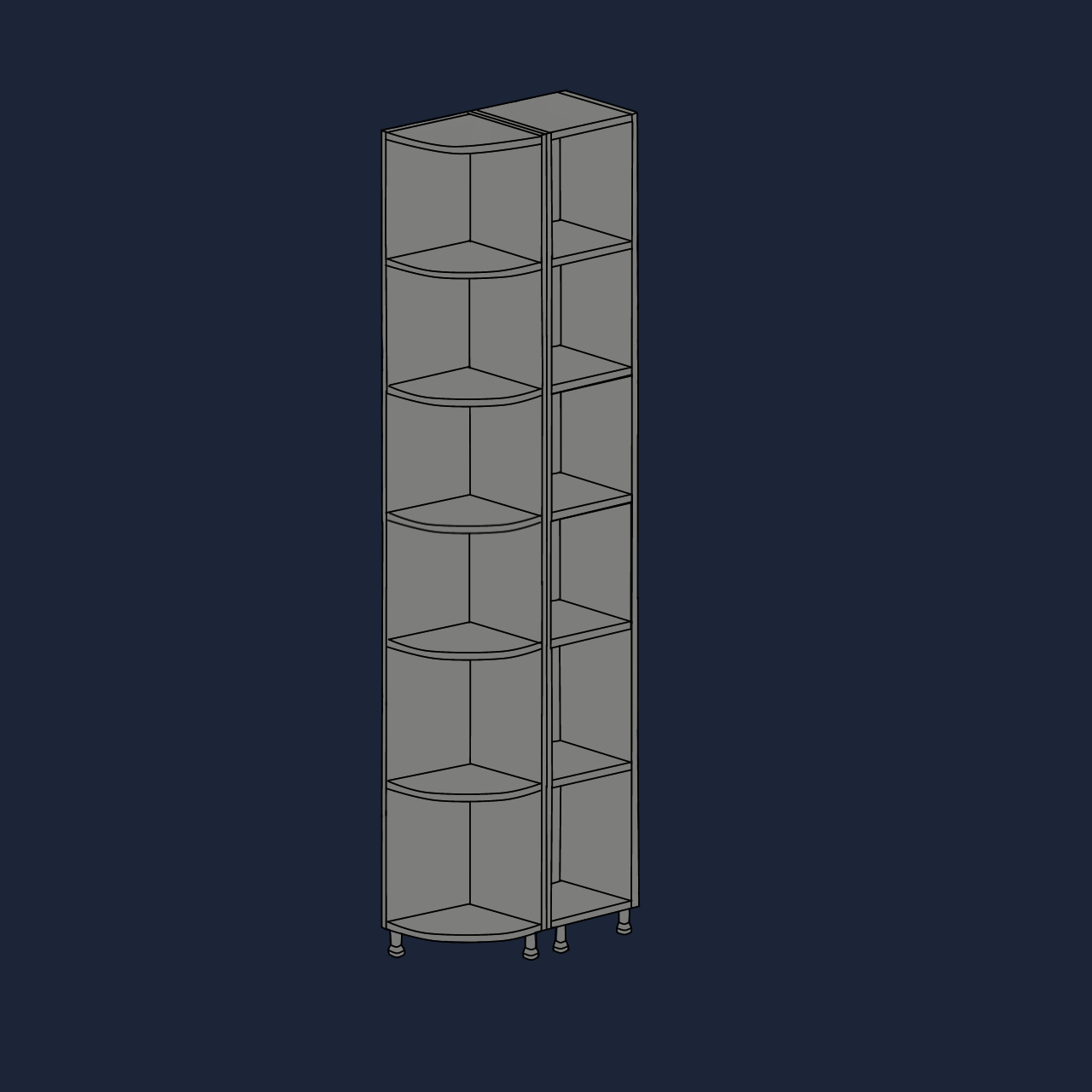
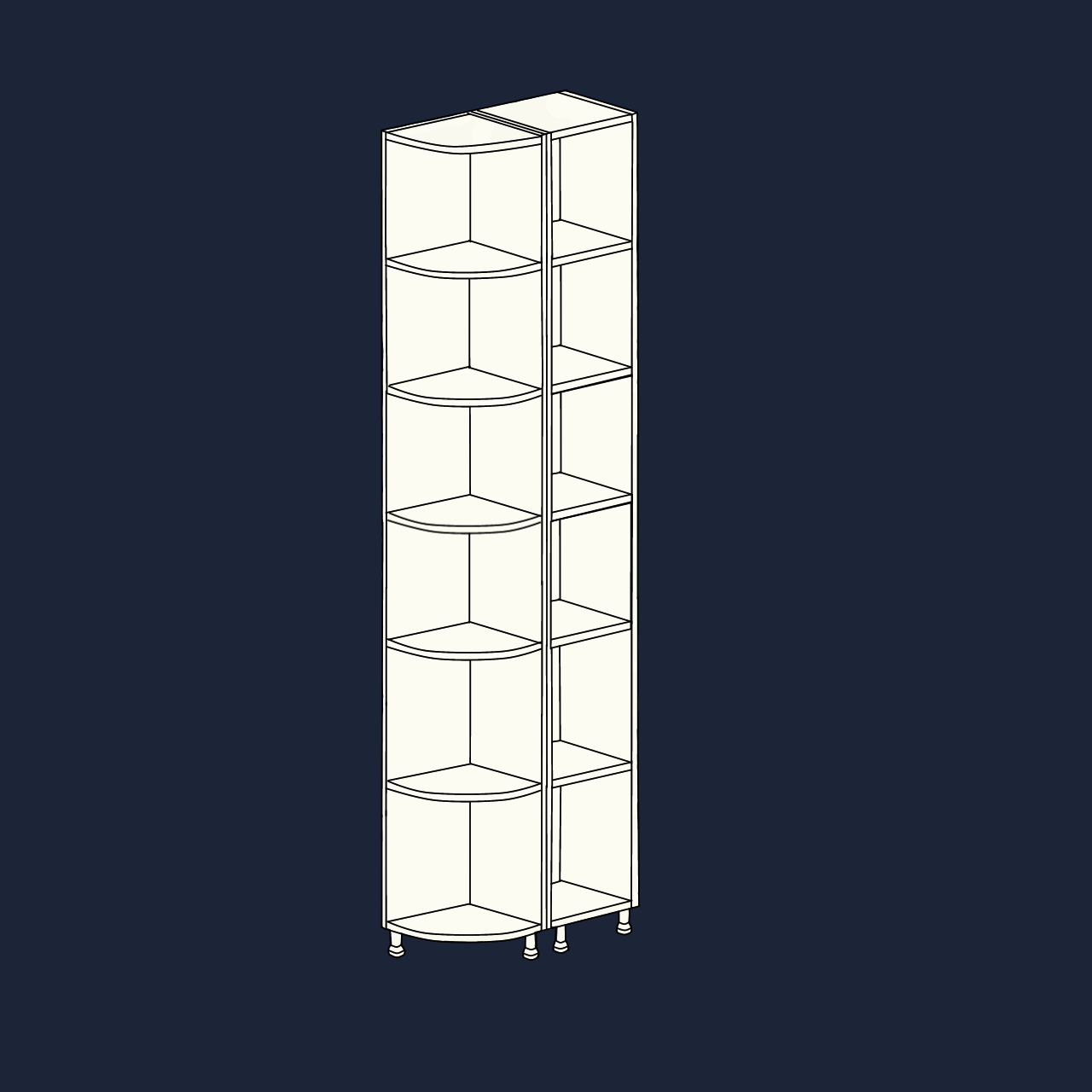
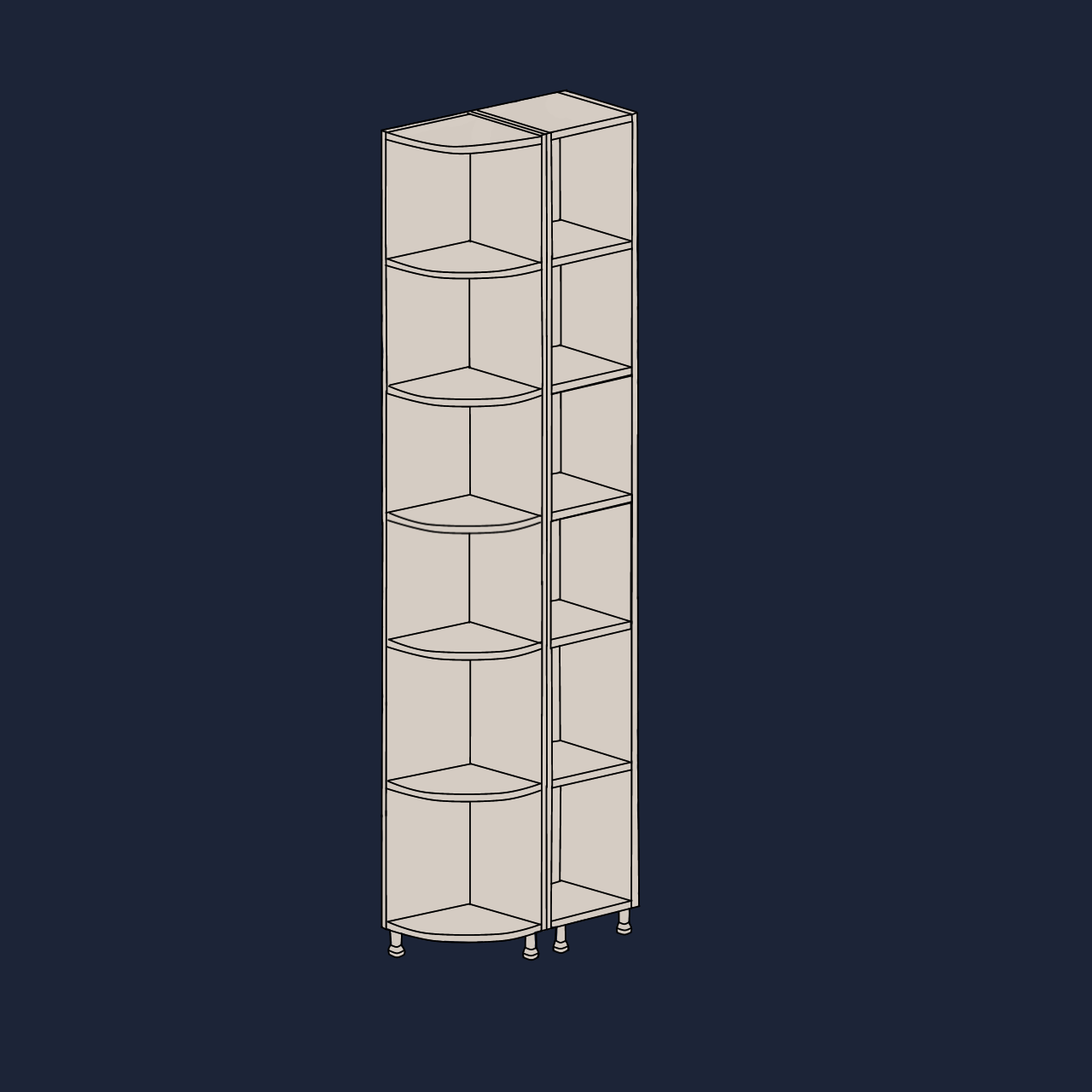
Curved Full Height Units bring the radius profile all the way from floor to ceiling, our Curved Full Height Unit (1970mm) is a genuinely versatile option for anyone wanting a soft, rounded end to a full-height run of cabinetry, rather than the radius stopping partway up the wall.
Matching the Right Radius Unit to Your Doors
Curved cabinets rely on a compatible radius carcass to achieve their rounded profile, and it's worth confirming you're ordering the correct one for your specific door range. A standard RADIUS unit kitchen carcass suits most Aspin Collins door ranges, while a RADIUSCART unit is specifically built for Cavallo curved doors and Windsor curved doors, matching their particular curve profile precisely. If you're unsure which radius unit your chosen doors need, call us on 0161 465 4007 before ordering, since fitting the wrong radius carcass to a curved door front won't give a properly seamless finish, the curve of the carcass and the curve of the door need to match exactly.
Genuine 2-Minute Click Assembly
Every curved unit in this range is built on our Quickcab system, arriving with its sides, base, and back already joined into a rigid frame, rather than needing to be built panel by panel like a traditional flat pack cabinet. This 2-minute assembly is roughly 75% faster than a standard flat pack build, and matters just as much on a curved unit as a standard one, the radius profile and its edging are factory-formed into the carcass itself, so there's no additional shaping or fitting complexity added to your own assembly process, all of that harder work has already been done before it reaches you.
Where to Use a Curved Unit in Your Layout
Curved units work best at a genuine transition point in your kitchen, the end of a peninsula, the point where a run of cabinets meets an open-plan dining or living space, or anywhere a hard square corner would otherwise be the first thing someone walks past entering the room. They're less commonly used mid-run, since their real value comes from softening a visible end point rather than a corner buried between two other cabinets. If you're planning where a curved unit fits into a wider layout, our guide on how to plan a kitchen cabinet layout step by step covers the broader planning process this kind of decision fits into.
Choosing the Right Colour
White and Light Grey keep a curved unit's rounded profile feeling light and unobtrusive, particularly effective where the curve is meant to ease a transition rather than draw attention to itself. Oak brings warmth to the radius, softening the visual weight of a tall curved unit especially. Dust Grey offers a considered, contemporary neutral that suits a curved unit sitting alongside darker worktops or flooring.
Fast, Reliable Delivery
Our curved units are dispatched promptly with delivery across the UK. Since getting the right radius carcass matched to your specific door range matters more here than on a standard cabinet, it's worth confirming your door style with us before ordering if you have any doubt.