
J-Pull Handleless Doors | Gloss or Matt
Select Gloss or Matt
Upgrade your kitchen with J-pull handleless kitchen doors, designed for a sleek, contemporary and minimalist look. With the grip built into the door edge, these durable doors create a seamless finish, perfect for modern kitchens. Available in gloss and matt finishes.
Select your door colour below
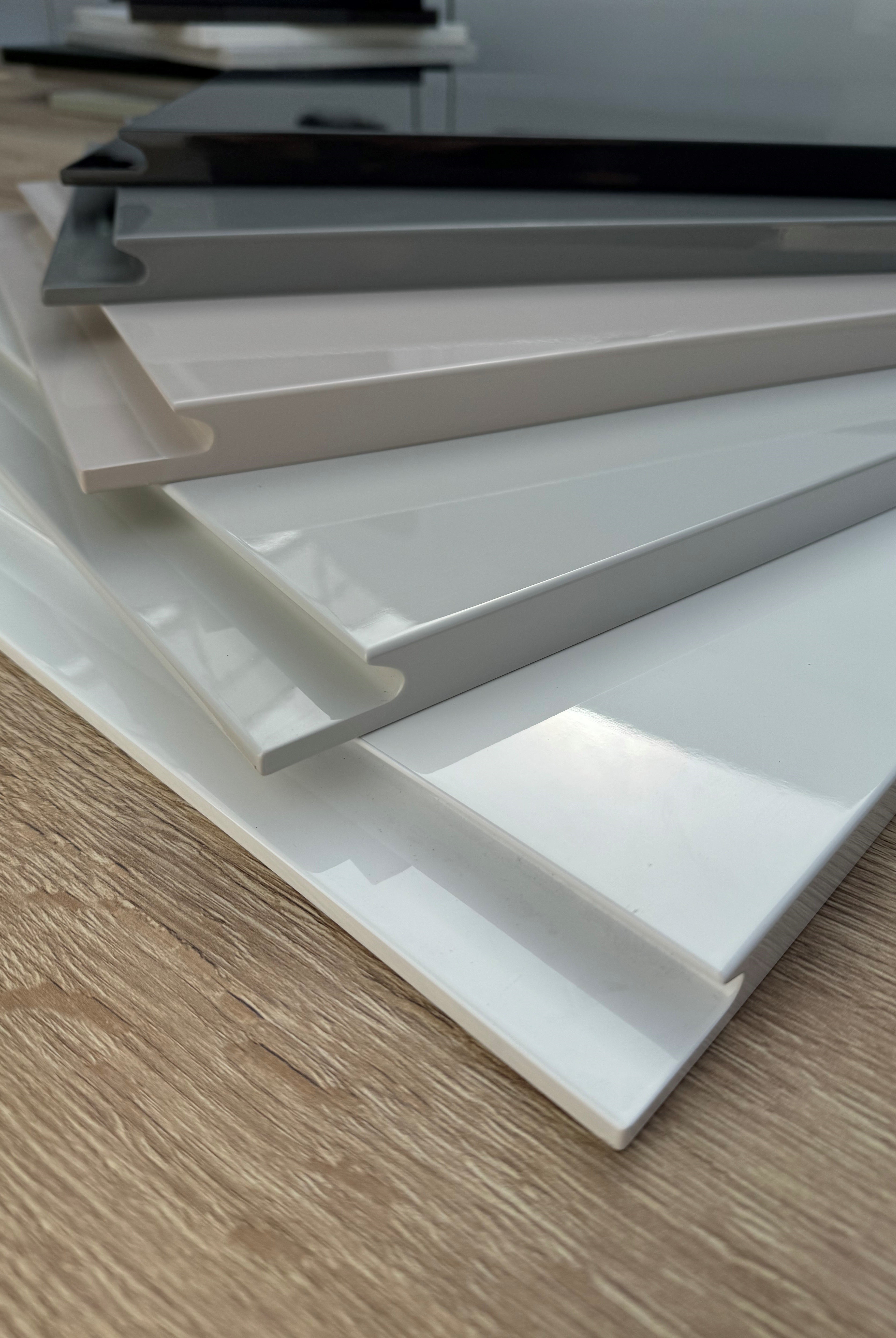
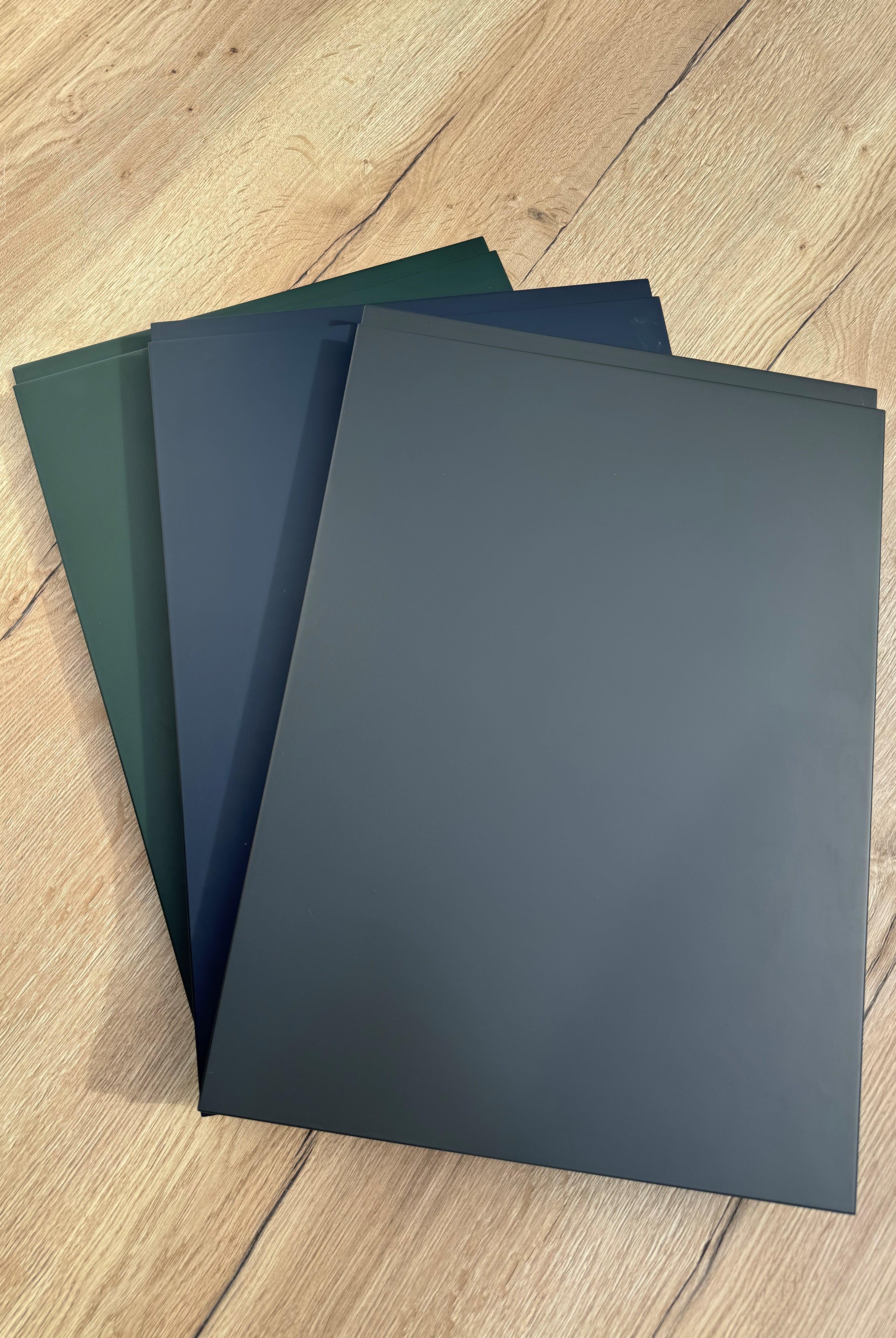
Why Choose J-Pull Handleless Kitchen Doors?
A handleless kitchen looks calm because nothing interrupts the line of the doors and drawers. Our J pull kitchen doors create that look with a grip shaped into the edge of the door itself, so you open a door by hooking your fingers behind the lip. There are no handles to choose, buy or fit, and no screw holes across the front of the kitchen, which keeps the whole room looking clean and uncluttered.
Every handleless kitchen door in the range is supplied on its own, which makes it a good fit for a refit. If your cabinets are in good condition, you can keep the carcasses and change only the fronts, which is often the quickest way to give a tired kitchen a new look without paying for a full replacement. If you are looking for kitchen cabinet doors that bring a modern finish to the units you already own, this is a straightforward way to do it.
The doors suit new kitchens equally well. Each colour has matching drawer fronts and finishing components, so you can plan a complete kitchen in one shade and be confident that every part of it matches. Aspin Collins is a UK-based supplier delivering across the UK, and every door size can be ordered drilled or undrilled to suit your hinges.
Gloss or Matt?
The two finishes share the same door, so the choice comes down to how you want the kitchen to look and feel.
Gloss is a high-shine painted finish that reflects light. In a smaller or darker room that reflection helps the kitchen feel brighter, and in a larger room it gives the whole run of units a polished, showroom look. Gloss shows fingerprints more readily than matt, so a quick wipe keeps it looking its best, and it works particularly well with light colours such as White, Cream and Cashmere.
Matt has no shine, so the colour looks soft, even and understated. It hides fingerprints better than gloss, and it suits calm, contemporary schemes as well as deeper colours that can look heavy with a reflective surface. Matt Anthracite and Matt Indigo are good examples, because the lack of glare lets the colour look rich rather than harsh.
Both finishes have the same thickness, edges and J-pull profile, so you can choose on appearance alone. Some kitchens use gloss on tall units or an island and matt elsewhere, as long as the colours are chosen to work together.
Gloss and Matt Colours
Six colours are available in gloss: White, Light Grey, Dust Grey, Cashmere, Cream and Anthracite. Six are available in matt: White, Light Grey, Dust Grey, Cashmere, Anthracite and Indigo. Cream is gloss only, and Indigo is matt only.
White is the brightest choice and works with almost any worktop, while Cream and Cashmere are softer neutrals if pure white feels too stark. Light Grey and Dust Grey give a modern, quiet backdrop that suits both small and open-plan kitchens, with Dust Grey the deeper and more muted of the two. Anthracite is the boldest option, and it looks striking on tall units, an island or a whole kitchen. Indigo adds a deep blue that pairs well with brass, oak and pale stone.
Every colour is painted, so the same shade carries across doors, drawer fronts and finishing components. That matters in a handleless kitchen, where the doors, drawers, plinths and end panels are all visible as one continuous surface. If you are unsure which colour suits your worktop, flooring or walls, call us and we will talk it through.
Choosing a Colour for Your Kitchen Style
Light colours such as White, Cream and Cashmere suit Scandinavian and minimalist kitchens, where the aim is to bounce light around the room and keep the look airy. They pair well with timber worktops, pale stone and light flooring.
Light Grey and Dust Grey suit contemporary and transitional kitchens. They give a neutral backdrop that works with white quartz, oak, black fittings and most wall colours, so they are a flexible choice if you may change the worktop or walls later.
Anthracite and Indigo suit anyone who wants a stronger statement. Used on base units with lighter wall units, they add depth without making the room feel closed in, and used on an island they create a clear focal point. In every case, because the J-pull is part of the door, the colour and finish do the work, which is why choosing the right shade matters so much.
Construction and Quality
Each of these MDF kitchen doors is a one-piece slab made from 22mm board, sealed and painted in your chosen colour and finish. The edges are sealed and painted to match the face, and the reverse is finished in matt melamine paper for a smooth backing.
The J-pull is a shaped lip along the door edge. The top back section is thicker than average, which adds durability where the door is handled most. The face is flat with no panel detail, so these slab kitchen doors wipe clean with a damp cloth and suit minimalist and contemporary kitchens.
To keep the look consistent around the whole kitchen, the range includes shaped end panels and corner posts that continue the J-pull line, so the grip lines stay symmetrical from one unit to the next. Because the doors are painted rather than wrapped, the colour and edge finish are consistent across every size in the range.
Sizes and Matching Products
The door range includes base, wall and tall doors, with heights of 715mm and 895mm for standard base and wall units and 1245mm and 1965mm for tall units. Oven fillers, corner doors, a glazed door and curved doors in three heights are also available. Corner doors are handed, so order both the left and right door for each corner.
Matching kitchen drawer fronts come in heights of 140mm, 175mm, 283mm and 355mm, and the larger sizes can also be used as small doors. Matching finishing components, including plinths, cornice and pelmet, corner posts and end panels, are available in each colour, so you can update your kitchen cabinets and doors together and finish the exposed sides of units neatly.
If you are planning a whole kitchen, pick one colour and order the doors, drawer fronts and finishing components together so the shade stays consistent. If you only need a few fronts to repair or update part of a kitchen, you can order just those sizes.
How to Measure and Order
For a kitchen cabinet door replacement, start by measuring the height and width of each existing door and drawer opening, then choose the nearest size in your colour. List every door by position, such as base, wall or tall, so nothing is missed, and note any corner units, because corner doors are handed.
Next, decide whether you want each door drilled or undrilled. Drilled doors have the hinge holes drilled 100mm from the top and bottom to the centre of the hinge hole, ready for standard cabinet hinges. Undrilled doors suit anyone who prefers to drill to their own hinge positions.
If you are unsure about any size or colour, call our team before ordering and we will help you check your list.
Caring for Your Doors
Wipe the doors with a clean damp cloth and a solution of lukewarm water with no more than 5% soap, then dry with a soft cloth. Avoid abrasive cleaners, bleach, solvents and rough pads, because they can mark the painted surface. Gloss may need a little more attention to keep fingerprints at bay, while matt is more forgiving in daily use.
J-Pull or True Handleless?
When comparing J pull kitchen doors with other handleless styles, the key difference is where the grip sits. A J-pull door has the finger grip shaped into the door itself, so each door works on its own. A true handleless system uses a separate rail fitted to the cabinet, which has to be planned into the kitchen from the start. A J-pull gives you the same clean, handle-free look with standard cabinets, which is why it suits new kitchens and refits alike.
Need Help?
If you would like help with colours, finishes or sizes, call our team on 0161 465 4007. We can talk you through which door sizes suit your cabinets and which colour works with your worktop.
Frequently Asked Questions
1. What is a J-pull on a handleless kitchen door?
A J-pull is a grip shaped into the edge of the door, so you open it by hooking your fingers behind the lip. It is part of the door itself, so no handles are needed.
2. What is the difference between J-pull and true handleless doors?
A J-pull door has the grip shaped into its own edge. A true handleless system uses a separate rail fitted to the cabinet, which must be planned from the start, so J-pull suits refits better.
3. Will J-pull handleless doors fit my existing cabinets?
Yes, the doors are supplied on their own, so they can replace your existing fronts. Measure each opening, choose the nearest size, and order drilled doors if you want the hinge holes done for you.
4. Do I need special hinges for J-pull handleless doors?
No special hinges are needed. Standard cabinet hinges work, and drilled doors have the hinge holes drilled 100mm from the top and bottom to the centre of the hinge hole.
5. Are J-pull handleless doors harder to clean?
No, the doors are flat slabs with no panel detail, so a damp cloth wipes them clean. The J-pull lip is smooth, so it needs only a quick wipe. Avoid abrasive cleaners, bleach and solvents.
6. Should I choose gloss or matt J-pull doors?
Choose gloss for a bright, reflective look that lifts a smaller room, or matt for a soft, understated finish that hides fingerprints better. Both share the same 22mm slab and J-pull profile.
