
Loose Kitchen Drawer Front? Here Is How to Fix It Properly
A loose kitchen drawer front is one of the most common small faults in any kitchen. The front starts to wobble when you pull the handle, sits out of line with the drawers around it, or comes away from the drawer box completely. The good news is that it is almost always a simple fix. This guide explains how drawer fronts are attached, why they work loose, and how to fix them, including when you need new kitchen drawer front fixing brackets.
In short:
- Find the cause: most loose fronts come from screws pulling out of the board or a worn or broken fixing bracket.
- Fix the fixing: re-fix stripped screw holes, or fit new brackets made for your drawer box system.
- Realign it: adjust the front so the gaps around it match the drawers and doors beside it.
How Kitchen Drawer Fronts Are Attached
The drawer front you see is a separate panel fixed to the front of the drawer box behind it. There are two main ways it is held on:
- Screwed to a board drawer box: on traditional wooden or MFC drawer boxes, screws go through the front of the box from the inside and into the back of the drawer front.
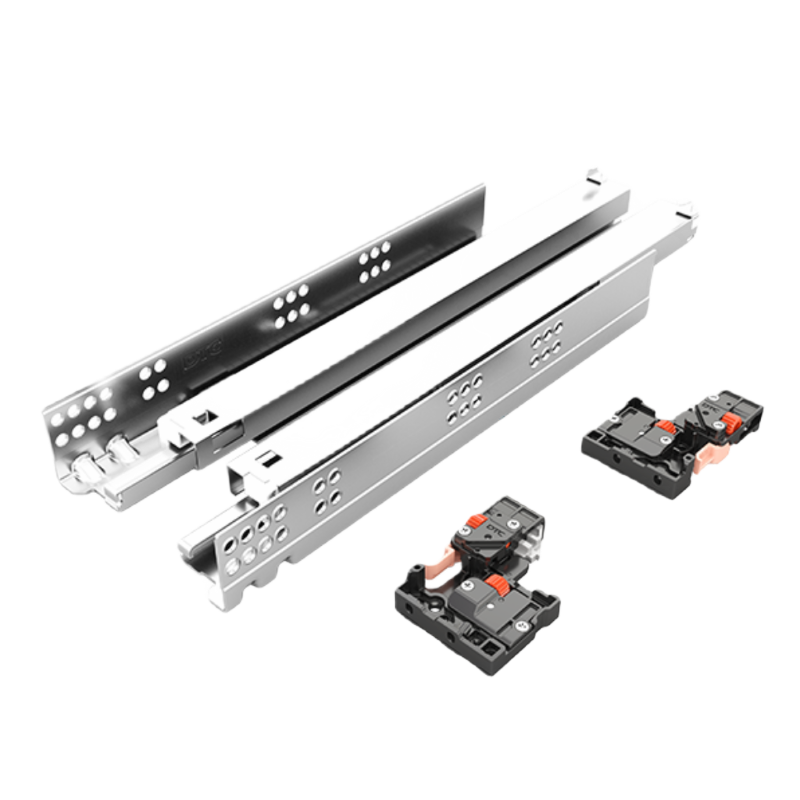
- Fixing brackets on a metal drawer system: on modern drawer boxes with metal sides, small brackets are screwed to the back of the drawer front and then clip or lock into the drawer sides. These systems usually allow the front to be adjusted after fitting.
Pull the drawer out and look inside to see which type you have before you start.
Why Drawer Fronts Come Loose
Every time you pull a handle, the force goes through the drawer front and into its fixings. Over time, that can cause:
- Stripped screw holes: the screws lose their grip in the board, especially in chipboard, and start to pull out.
- Loose or broken brackets: a bracket can work free from its clip or crack after years of use.
- Overloaded drawers: heavy pans or tins put extra strain on the front every time the drawer is opened.
- A handle fixed too tightly or too loosely: a loose handle lets the front twist, which loosens its fixings too.
How to Fix a Loose Drawer Front: Step by Step
- Empty the drawer and, if you can, take it out of the cabinet so you can see the back of the front clearly.
- Check every screw. Tighten any that have simply worked loose, by hand rather than with a drill, so you do not strip them.
- Repair stripped holes. If a screw spins without tightening, move the fixing a few millimetres to fresh board, or fill the old hole with a glued wooden plug, let it dry and screw back into it.
- Check the brackets. On a metal drawer system, make sure each bracket clicks firmly into the drawer side. Replace any that are cracked, bent or will not hold.
- Refit and adjust. Put the drawer back and line the front up with its neighbours before tightening everything fully.
Always use screws that are shorter than the thickness of the front. Most drawer fronts are 18mm thick, so screws of around 15mm will hold without coming through the face.
Replacing Drawer Front Fixing Brackets
If the bracket is the problem, replace it with one made for your exact drawer system and drawer side height. Brackets are not interchangeable between systems, so check the brand of your drawer box first. We stock:
- Dragon front fixing brackets for the DTC Dragon drawer box, in 86mm and 204mm sizes.
- Elite front fixing brackets for the DTC Elite drawer box, in 88mm and 172mm sizes.
Match the bracket size to the height of your drawer sides. Shallow drawers use the smaller brackets, and deep pan drawers use the taller ones. Fit the new bracket in the same position as the old one, screw it to the back of the front, then clip it into the drawer side.
How to Adjust a Drawer Front That Sits Out of Line
Sometimes the front is secure but sits crooked, sticks out or catches on the drawer above. On metal drawer systems, the fixing brackets usually have small adjustment screws for height and tilt. Turn them a little at a time and check the gaps after each adjustment.
Aim for an even gap of a few millimetres around every front, matching the gap between the doors beside it. On board drawer boxes without adjusters, loosen the screws slightly, move the front into line and re-tighten. If the whole drawer sits low or binds, the problem is usually the runners rather than the front. Our guide on how to fit drawer runners properly covers how to check and reset them.
When to Replace the Drawer Front Instead
A fix is not always enough. Replace the front if it is cracked through, swollen from water damage, or peeling at the edges, or if the screw holes have broken out so badly there is no solid board left to fix into. A new front in the same size fits the existing drawer box, so you do not need a new drawer.
Our guide on replacing drawer fronts explains how to measure and order new ones, and our pan drawers guide lists the standard drawer front heights from 140mm to 355mm.
How to Stop Drawer Fronts Working Loose Again
- Keep heavy items in deep pan drawers with high-sided boxes, not in shallow drawers.
- Check handle screws once a year and tighten them gently if needed.
- Choose soft close runners, so drawers are not slammed shut against their fixings.
- Use the right length of screw every time, so it grips the full depth of the board.
If you are not sure which drawer system you have or which brackets you need, contact Aspin Collins or call 0161 465 4007 with a photo of the inside of the drawer.
Frequently Asked Questions
1. Why does my kitchen drawer front keep coming loose?
Usually because the screws have stripped their holes in the board or a fixing bracket has worn. Heavy loads and pulling hard on the handle make it worse over time.
2. How do you reattach a drawer front that has come off?
Remove the drawer, check the screws or brackets on the back of the front, re-fix any stripped holes or replace broken brackets, then refit the front and align it with its neighbours.
3. What are drawer front fixing brackets?
They are small brackets screwed to the back of a drawer front that clip into the sides of a metal drawer box. They hold the front on and usually allow small adjustments.
4. Are drawer front fixing brackets universal?
No. Brackets are made for specific drawer box systems and side heights, so check the brand and height of your drawer box before ordering replacements.
5. What size screws should I use on a drawer front?
Use screws shorter than the thickness of the front. For a standard 18mm drawer front, screws of around 15mm hold securely without breaking through the face.
6. Should I fix or replace a damaged drawer front?
Fix it if the board is sound and only the fixings have failed. Replace it if the front is cracked, swollen or peeling, or if there is no solid board left to screw into.